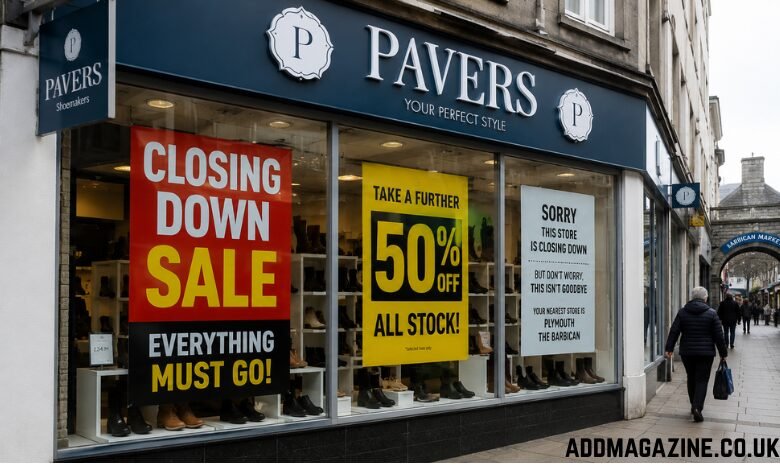
News about pavers store closures has created questions among shoppers, particularly after the footwear retailer decided to end trading at one of its Plymouth locations. The affected shop is in New George Street, where Pavers has maintained a presence for more than ten years. Its departure is another change for a city centre that has recently experienced the loss of several established businesses.
Pavers is not disappearing from Plymouth, nor is there confirmed evidence of a nationwide shutdown plan. The company still has another shop in the Barbican area, while its wider retail business continues operating across the UK and Ireland.
What Is Changing in Plymouth?
The New George Street shop will complete its final day of business on Sunday, February 8. Before closing, the branch has been clearing its remaining footwear through discounted sales.
For people who have regularly visited this branch, the closure marks the end of a familiar shopping option in central Plymouth. The company has not released a detailed public explanation for the decision, leaving the exact business reasons unknown.
Pavers Will Still Have a Store in the City
An important detail in the pavers store closure Plymouth story is the continued operation of the company’s Barbican branch. Pavers opened that location in the Old Barbican Market in 2023, giving the retailer a second physical presence in the city.
Keeping the Barbican shop open means local customers will still be able to visit a Pavers store after New George Street closes. Operating two branches within one city may not always remain commercially practical, particularly when customer habits, property expenses, and shopping areas change. Although Pavers has not said this influenced its decision, businesses commonly review whether nearby locations are both necessary.
Why Can a Long-Running Shop Suddenly Close?
A shop remaining open for many years does not guarantee that it will continue trading indefinitely.
Rental agreements, staff expenses, maintenance, energy bills, customer numbers, and changing sales patterns can all affect these decisions. Sometimes a branch closes despite the wider company remaining financially active. Without a direct explanation from Pavers, it is not possible to identify one specific reason behind the Plymouth decision.
What Will Happen to the Store Employees?
The position of employees working at New George Street has not been publicly explained. No clear announcement has confirmed whether staff members will move to other locations or whether the closure will result in job losses.
Since another Pavers shop remains in Plymouth, some people may wonder whether transfers are possible. However, any claims about future employment arrangements would be speculation until the company provides further details.
The Business Behind the Pavers Name
Pavers has developed considerably since its early years. Catherine Paver established the business in 1971, beginning with a small-scale method of selling footwear directly to customers. Over time, the operation grew into a major shoe retailer with its headquarters in York.
The company currently has around 185 shops across the UK and Ireland and a workforce of more than 1,850 people. Its size provides important context when discussing individual closures. One branch shutting down can be significant for a local shopping area without necessarily representing serious difficulties across the entire company.
What Recent Financial Figures Tell Us
Pavers Ltd recorded sales of £171.6 million for the financial period ending February 1, 2025. The previous year’s figure stood at £169.2 million, meaning overall turnover increased.
Profit before tax moved in the opposite direction, falling to approximately £9.66 million from a restated £10.9 million. Increased staffing and general operating expenses were among the pressures affecting profitability. These figures show a company generating higher sales while also dealing with growing costs, a situation that can encourage retailers to examine the performance of individual branches more closely.
Store Closures Do Not Always Mean Business Failure
Large retailers frequently adjust their store networks. They may leave one shopping district, relocate to another site, expand distribution facilities, or open shops in different regions.
Pavers Has Expanded Beyond One Footwear Brand
The company’s operations are also broader than its Pavers-branded shops. Over recent years, the business has added several footwear companies to its portfolio, including Jones Bootmaker, Herring Shoes, and Norwich Footwear.
Its stores offer both company-owned products and shoes from outside brands. This wider business structure means the financial health and future direction of Pavers cannot be judged solely by what happens to one high-street location.
Why People Search Pavers Store Closures Tomorrow Near Me
Searches for pavers store closures tomorrow near me can increase quickly when local closure stories appear online. Someone reading about Plymouth may become concerned that a branch in another town is also preparing to close.
The confirmed Plymouth news only relates to the New George Street shop. Customers who want information about another location should check that particular branch before assuming it is affected. Retail opening hours and closure plans can change individually, and a local news report does not automatically apply to the entire store network.
Are Pavers Store Closures Tomorrow Happening Nationwide?
People searching pavers store closures tomorrow may expect to find a large list of locations closing at once. The information surrounding Plymouth does not establish that such a national closure programme is taking place.
Pavers may continue changing its retail network as business conditions develop, just as other large companies do. Some branches may eventually shut, while new shops may open elsewhere. For now, the Plymouth city-centre closure should be treated as a specific local development.
A Difficult Period for Plymouth City Centre
The loss of Pavers comes during another period of retail change in central Plymouth. The city has recently seen other businesses close, while the departure of a major House of Fraser location is also expected to leave a noticeable gap.
Several closures happening close together can affect how people view the future of a shopping district. Fewer stores may reduce visitor numbers, which can create further challenges for remaining businesses. At the same time, each company makes decisions based on its own finances, property agreements, and long-term plans.
Changing Shopping Habits Are Reshaping Retail
Physical shops now operate in a very different environment from the one they faced ten or twenty years ago. Customers can compare prices, order products, and arrange deliveries without visiting a town or city centre.
Footwear retailers still have an advantage because many customers prefer trying on shoes before purchasing. Even so, maintaining a large number of stores is expensive. Businesses must decide which locations attract enough customers to justify their continuing costs.
What the Closure Means for Local Customers
After the New George Street shop shuts, Plymouth shoppers who want to visit Pavers in person will need to use the Barbican location. The continued presence of that branch reduces the impact for customers who prefer shopping in a physical store.
The closure may still be inconvenient for people who regularly visited the city-centre branch because of its location. It also removes another established retailer from New George Street, adding to concerns about empty commercial units and changing shopping patterns.
Conclusion
The discussion around pavers store closures has mainly developed because of the decision to close the long-running New George Street branch in Plymouth. Although the shop is ending operations, the company is maintaining its presence in the city through its Barbican location.
There is currently no clear evidence that this individual closure represents a nationwide withdrawal by Pavers. The retailer continues to operate a substantial network, generate significant sales, invest in business infrastructure, and manage several footwear brands. The Plymouth decision instead shows how established retailers are continually reviewing individual locations as costs rise and customer behaviour changes.