The human desire to preserve memories is as old as civilisation itself. From the hand-painted miniatures of the Renaissance to the sepia-toned daguerreotypes of the Victorian era, we have always sought ways to anchor the fleeting moments of our lives in physical form. In the twenty-first century, this quest has moved beyond the two-dimensional plane. We no longer just want to look at a picture; we want to perceive its depth, its volume, and its presence. This has led to the rise of the 3D photo crystal, a medium that combines high-grade optical glass with precision laser technology to create a “frozen” moment in time.
As we move through 2026, the technology behind these keepsakes has reached a pinnacle of clarity and detail. The transition from a digital file on a smartphone to a volumetric sculpture inside a solid block of glass is a journey of both sophisticated physics and artistic interpretation. It represents a shift from the ephemeral nature of digital data to the enduring permanence of crystalline structure.
The Evolution of the Modern Keepsake
For decades, the standard way to display a cherished photograph was within a wooden or metal frame. While effective, these displays are subject to the ravages of time-ink fades, paper yellows, and glass can smudge or break. Digital frames offered a temporary solution, allowing for a rotating gallery of images, but they lack the tactile, heirloom quality that many people crave for their most significant milestones.
The 3D photo crystal fills this gap by offering a medium that is virtually impervious to environmental decay. Unlike a print, the image is not on the surface; it is etched inside the material itself. This means it cannot be scratched, faded by ultraviolet light, or worn away by handling. It is a souvenir designed to last for generations, turning a simple snapshot into a piece of architectural art.
The Physics of Sub-Surface Laser Engraving
The magic of these crystals lies in a process known as Sub-Surface Laser Engraving (SSLE). To the casual observer, it appears as though a miniature sculpture has been miraculously inserted into a solid block of glass without any visible entry point. The reality is grounded in the precise manipulation of light.
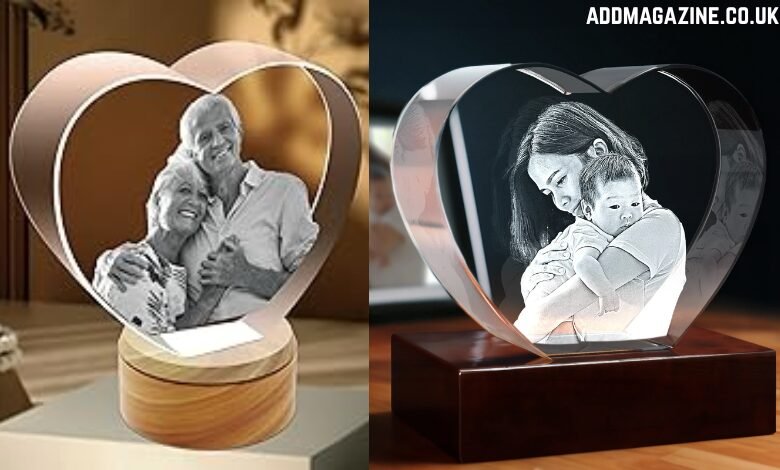
When individuals search for 3d crystals with photo engraving, they are engaging with a process that involves a high-intensity laser beam focused to a microscopic point. This laser is programmed to pass through the surface of the optical crystal without leaving a trace. It is only at the precise focal point-deep within the glass-that the energy becomes intense enough to create a tiny fracture or “dot.”
By plotting hundreds of thousands, or even millions, of these microscopic points, the laser creates a “point cloud.” When viewed together, these dots form a high-definition image. Because the laser can be adjusted to different depths along the X, Y, and Z axes, the resulting image is truly three-dimensional. It possesses a front, a back, and sides, allowing the viewer to walk around the crystal and see the subject from multiple angles.
Converting Two Dimensions into Three
One of the most frequent questions regarding this medium is how a standard, flat photograph taken on a regular camera can be turned into a three-dimensional bust. In 2026, this is achieved through a sophisticated blend of Artificial Intelligence and digital artistry.
When a 2D photo is uploaded, specialist software analyses the highlights and shadows to determine the topography of the subject’s face. AI algorithms, trained on thousands of anatomical models, “guess” the depth of the nose, the curve of the chin, and the recession of the eye sockets. A digital artist then refines this map to ensure that the proportions are accurate and that the likeness is preserved. This “depth mapping” is what allows a flat memory to take on a volumetric life, ensuring that a portrait looks as realistic from the side as it does from the front.
The Importance of Optical Quality: K9 Crystal
Not all glass is created equal. To achieve the sparkling clarity required for laser engraving, manufacturers use a specific type of material known as K9 Borosilicate glass, often referred to as optical crystal. This material is prized for its high refractive index and exceptional transparency.
K9 crystal is lead-free and contains fewer impurities than standard window glass. This lack of internal “noise” is crucial; if the glass contained bubbles or streaks, the laser would catch on them, ruining the precision of the engraving. Furthermore, the high lead-free quality ensures that the light passes through the crystal and hits the internal fractures cleanly, making the 3D image appear to glow from within. The weight of the crystal also adds a sense of value and importance, making it feel more like a monument than a mere trinket.
Milestones, Memorials, and Pet Tributes
The applications for 3D photo crystals are as varied as the memories they house. However, they have become particularly popular in three specific areas: weddings, graduations, and memorials.
For weddings, the crystals capture the intricate lace of a gown or the joy of a first dance in a way that feels more “alive” than a flat print. In the realm of graduation, they serve as a heavy, permanent trophy of a significant academic achievement. Perhaps the most poignant use, however, is in the creation of memorials. Whether for a lost relative or a cherished pet, the 3D nature of the image provides a sense of presence that can be very comforting. Seeing the familiar contours of a loved one’s face in a lifelike, three-dimensional form offers a tactile connection to the past that a screen simply cannot provide.
Displaying and Illuminating the Crystal
While a 3D crystal is beautiful on its own, its true potential is only realised through proper lighting. Because the image is made of microscopic fractures that reflect light, it requires a dark background and a direct light source to truly “pop.”
Most crystals are displayed on a specialized LED light base. These bases shine light directly up through the bottom of the glass. As the light hits the internal fractures, it scatters, making the 3D image appear brilliant and white against the clear surroundings. Some modern bases in 2026 even offer “colour-cycling” options or rotating platforms, allowing the viewer to see every angle of the volumetric etching as it catches the light. Without a light base, the image can appear faint or ghostly; with one, it becomes a focal point of any room.
Maintenance and Longevity in the Home
One of the greatest advantages of this medium is its ease of maintenance. Because the “ink” is actually tiny fractures inside the glass, there is nothing to smudge or wipe away. The only cleaning required is on the exterior surface of the crystal.
A simple microfibre cloth is usually sufficient to remove fingerprints or dust. For a deeper clean, a mild glass cleaner can be used, provided it is buffed dry to prevent streaks. In 2026, many owners are prioritising the longevity of their collections by keeping them away from the very edge of shelves to avoid accidental drops. While the internal image will never change, the glass itself can still chip if hit with enough force. However, barring physical trauma, a 3D photo crystal will look exactly the same in a hundred years as it does the day it was unboxed.
The Future of Crystalline Preservation
As we look toward the future, the integration of new technologies continues to enhance the experience. We are beginning to see the rise of “Augmented Reality” crystals, where scanning the glass with a smartphone app triggers a digital overlay, perhaps playing a video of the moment the photo was taken or a recorded voice message.
Despite these high-tech additions, the core appeal of the 3D photo crystal remains its simplicity and its permanence. In an increasingly digital world where our memories are often stored in fragile “clouds,” there is a profound comfort in owning a heavy, solid object that physically contains a piece of our history. It is a marriage of the latest laser technology and the timeless beauty of crystal, providing a unique way to hold onto the people and moments that define us.