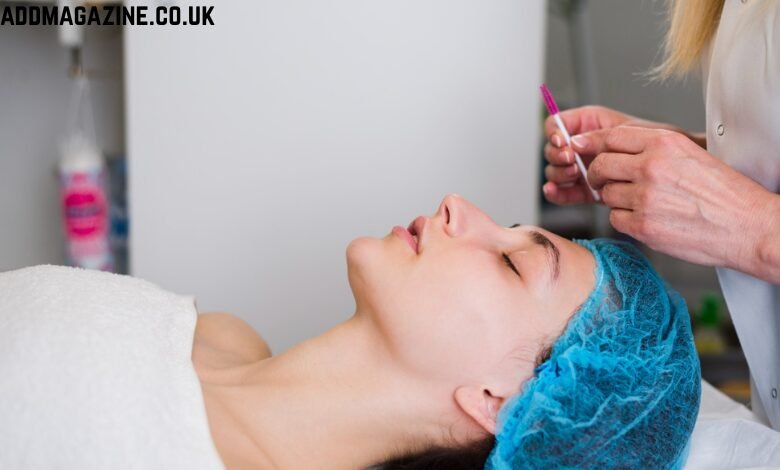
For many women in the United States, 2025 looks a lot like the years before it — demanding work schedules, caregiving responsibilities, disrupted sleep, and a persistent feeling that their Personal well-being often gets pushed behind everything else that demands attention. What has changed is the growing recognition, both among healthcare providers and women themselves, that fragmented care doesn’t produce lasting results. Treating a thyroid issue in isolation while ignoring chronic stress, or addressing anxiety without considering hormonal shifts, leaves the root causes of poor health largely untouched.
This isn’t a trend. It reflects a deeper shift in how women are thinking about their own bodies — not as collections of separate symptoms, but as interconnected systems where stress, hormones, nutrition, sleep, and emotional health all influence one another. Understanding how these systems interact, and what happens when they fall out of balance, is the foundation for making informed decisions about care.
What Holistic Women’s Wellness Actually Means in Practice
Although the phrase appears frequently, its exact meaning is not always clearly explained. In practical terms, holistic women’s wellness refers to an approach that considers the full range of factors shaping a woman’s physical and mental health — rather than treating individual complaints as unrelated events. This means a practitioner asking not just what symptoms are present, but when they started, what else changed at that time, how sleep has been affected, and what the emotional environment looks like on a daily basis.
Women seeking this kind of care through services focused on holistic women’s wellness are typically looking for something conventional medicine hasn’t fully provided — sustained improvement rather than symptom management, and a care model that treats them as a whole person rather than a collection of complaints.
This matters because women’s health conditions are rarely isolated. Poor sleep impairs immune function. When these connections go unaddressed, symptoms cycle repeatedly without resolution. A truly integrated approach requires practitioners who understand these relationships and are willing to explore them thoroughly before recommending interventions.
The Difference Between Integrative and Truly Holistic Care
Many people use “integrative” and “holistic” interchangeably, but there is a meaningful distinction. Integrative care typically combines conventional medical treatments with selected complementary therapies — for example, prescribing medication while also recommending acupuncture. Holistic care, by contrast, begins with the premise that no single system in the body operates independently and works to understand the person before identifying the intervention.
In practice, this means holistic care often involves a longer assessment period, more detailed health history reviews, and a broader set of questions about lifestyle, relationships, and environment. For women managing complex or chronic conditions, this depth of inquiry can make a significant difference in whether care actually resolves the underlying issue or simply manages its expression.
How Chronic Stress Disrupts Hormonal Balance
Cortisol, the primary stress hormone produced by the adrenal glands, plays a central role in nearly every hormonal process in the female body. Under normal conditions, cortisol rises in the morning to support alertness and declines through the day. When stress is chronic — meaning the nervous system remains in a state of sustained activation — this rhythm breaks down. Cortisol levels stay elevated, and the body begins redirecting resources away from reproductive, digestive, and immune functions in order to sustain the stress response.
The downstream effects of this are significant. Elevated cortisol suppresses progesterone production, which can lead to irregular cycles, increased PMS symptoms, and difficulty conceiving. It disrupts thyroid hormone conversion, contributing to fatigue, weight changes, and cognitive fog. It also interferes with insulin sensitivity, which affects energy regulation and long-term metabolic health. These are not minor inconveniences — they are physiological consequences of a system under sustained pressure.
Why Women’s Hormonal Systems Are Particularly Sensitive to Stress
The hypothalamic-pituitary-adrenal (HPA) axis, which governs the body’s stress response, is closely linked to the hypothalamic-pituitary-gonadal (HPG) axis, which regulates reproductive hormones. In women, this connection is especially direct. Research documented through the National Institute of Child Health and Human Development has long established that stress-related hormonal disruptions have measurable effects on menstrual regularity, ovulation, and perimenopause progression.
This means that for many women, the experience of feeling “off” — moody, exhausted, unable to concentrate, gaining weight without obvious cause — is not imaginary or incidental. It reflects a genuine physiological cascade triggered by stress that has not been adequately addressed. Treating the symptoms without reducing the underlying stress load rarely produces lasting improvement.
Perimenopause and the Compounding Effect of Unmanaged Stress
Perimenopause, the transitional phase that can begin anywhere from the mid-thirties to the late forties, involves natural shifts in estrogen and progesterone levels. For women who are already managing chronic stress, this transition tends to be significantly more difficult. The hormonal fluctuations that characterize perimenopause interact directly with an already-taxed stress response system, amplifying symptoms that might otherwise be mild.
Common experiences during this period include intensified anxiety, disrupted sleep, increased sensitivity to temperature, joint discomfort, and irregular cycles. When these occur in a woman who is also dealing with sustained professional or personal stress, the physiological burden is compounded. Addressing perimenopause effectively therefore requires more than hormone-specific interventions — it requires attention to the full picture of what the body is managing simultaneously.
Nutrition, Sleep, and Their Role in Hormonal Stability During Transition
During periods of hormonal change, the body’s demand for certain nutrients increases. Magnesium, for example, supports sleep quality and nervous system regulation — both of which are frequently disrupted during perimenopause. B vitamins are essential for cortisol metabolism and energy production. Omega-3 fatty acids play a role in reducing inflammatory activity, which tends to increase during hormonal transitions.
Sleep is not simply a recovery tool during this period — it is an active hormonal process. Growth hormone is primarily released during deep sleep. Melatonin regulates the body’s circadian rhythm and has downstream effects on estrogen metabolism. When sleep is consistently disrupted — whether due to night sweats, anxiety, or irregular schedules — the hormonal recovery that should occur overnight is compromised, making daytime symptoms worse and the overall transition more difficult to manage.
How the Nervous System Supports Lasting Recovery
Sustainable health improvement for women dealing with stress-related hormonal disruption depends heavily on the state of the autonomic nervous system. The autonomic nervous system operates in two primary modes: the sympathetic state, associated with activation and stress response, and the parasympathetic state, associated with rest, digestion, and recovery. Most women living with chronic stress spend the majority of their time in sympathetic dominance — a state in which the body is physiologically unable to prioritize healing, digestion, or hormonal regulation.
This is not a philosophical observation — it is a structural physiological reality. When the nervous system is consistently in a state of activation, the body conserves resources by suppressing non-essential functions. Hormonal production, immune surveillance, and cellular repair are all classified as non-essential under these conditions. The implication is straightforward: without meaningfully shifting the nervous system toward parasympathetic activity, other interventions — whether nutritional, hormonal, or therapeutic — will produce limited results.
Practical Approaches That Support Nervous System Regulation
Shifting the nervous system toward parasympathetic activity requires consistent, low-intensity practices rather than dramatic interventions. Practices that have shown consistent physiological benefit include slow, diaphragmatic breathing — which directly activates the vagus nerve and triggers parasympathetic responses — as well as moderate physical movement, particularly walking and gentle resistance training, which help metabolize excess cortisol without adding further physiological stress.
Structured rest, meaning deliberate periods of low stimulation during the day rather than simply waiting until bedtime, also plays a meaningful role. For women whose lives are organized around continuous output — whether professional or caregiving — building structured rest into the daily schedule is often one of the most impactful changes they can make, not because it feels productive, but because it provides the physiological conditions necessary for the body to actually repair and regulate itself.
Environmental and Lifestyle Factors That Are Frequently Overlooked
A complete picture of women’s health in 2025 includes factors that conventional medical appointments rarely have time to address. Endocrine-disrupting chemicals, found in a wide range of everyday products including personal care items, food packaging, and household cleaners, have documented effects on hormonal regulation. These compounds mimic or block the activity of naturally occurring hormones, and their cumulative effect over time is increasingly recognized as clinically relevant.
Social isolation, financial pressure, and caregiving burden also carry measurable physiological consequences. These are not lifestyle choices to be managed through better time planning — they are stressors with direct effects on cortisol output, immune function, and inflammatory activity. For women pursuing approaches to holistic women’s wellness, acknowledging these factors is not incidental to the conversation. They are often central to why progress has been limited despite other interventions.
Why Reducing Exposure Matters Alongside Other Health Practices
Reducing chemical burden and environmental stress is not about perfection — it is about reducing the total physiological load the body is managing. When a woman’s system is already strained by hormonal shifts and chronic stress, additional inputs that disrupt endocrine function add to a burden the body is already struggling to process. Even modest reductions in exposure to known disruptors can create measurable space for the body’s regulatory systems to function more effectively.
This approach requires no dramatic lifestyle overhaul. It begins with awareness — understanding which product categories carry the highest chemical burden, which environmental conditions affect sleep quality, and which daily habits either support or undermine nervous system regulation. Small, consistent changes across several areas tend to produce more durable outcomes than large interventions in a single area.
Closing Thoughts: Building a Sustainable Approach to Women’s Health
The most common mistake women make when addressing health challenges is expecting rapid resolution from a single intervention. Hormonal systems that have been disrupted over months or years do not stabilize quickly, and nervous systems accustomed to chronic activation do not shift overnight.
Holistic approaches to women’s health are most effective when they are treated as long-term frameworks rather than short-term treatment protocols. This means building care plans that evolve as the body responds, maintaining practices that support nervous system regulation even when symptoms improve, and continuing to address the underlying conditions — stress load, sleep quality, nutritional adequacy, environmental burden — that shaped the problem in the first place.
For women navigating stress, hormonal change, and persistent health challenges, the goal of holistic women’s wellness is not a distant ideal. It is a practical, achievable condition — one that requires real commitment, appropriate support, and a clear-eyed understanding of how the body actually works. That understanding, more than any single supplement, treatment, or recommendation, is what makes sustained improvement possible.