British lawns face their fair share of challenges — frequent rain, uneven patches, tight borders, and not enough weekend hours to keep everything tidy. However, smart tech is changing the game for UK homeowners, turning lawn care from a chore into something almost effortless.
In this article, we explore how these interconnected technologies, from robot mowers to sensor-fed watering, are helping everyday UK gardeners.
You too can achieve lusher, more resilient lawns with far less effort and environmental impact.
Smart Irrigation Systems Help You Water Precisely
If you have ever watered your lawn just before an unexpected downpour, you already know how easy it is to waste water.
Between sudden showers in Manchester and dry spells in the South East, guessing when and how much to water is rarely effective. Smart irrigation systems remove that guesswork entirely.
Devices such as the Gardena Smart Water Control and the Hozelock Cloud Controller adjust watering schedules automatically based on soil moisture and local weather data.
Instead of running on a fixed timer, they respond to real conditions. That means your lawn receives water only when it genuinely needs it.
For you, this translates into healthier root systems and noticeably lower water bills. Deep, well-timed watering strengthens grass rather than encouraging shallow, thirsty roots.
Over time, your lawn becomes more resilient, especially during warmer summers in Kent or Cambridgeshire. All you need is a stable Wi-Fi connection and occasional sensor checks to keep everything operating smoothly.
Robotic Lawn Mowers Give You Consistent Results
Keeping a lawn evenly cut throughout the growing season demands commitment. In spring, grass can surge almost overnight.
Then again, if you miss a week, your garden will suddenly look untidy. Robotic mowers remove that pressure by maintaining your lawn consistently, even when you are busy.
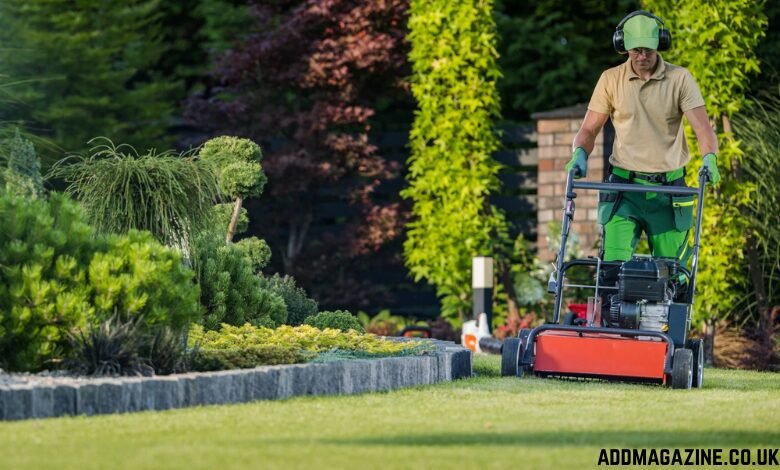
Models such as the Husqvarna Automower 430X or the Bosch Indego S+ 350 operate quietly and methodically, trimming little and often. That frequent cutting produces finer clippings, which naturally mulch back into the soil, improving lawn health over time.
For homeowners in suburban areas from Birmingham to Bristol, the quiet operation is an added advantage.
These machines work discreetly without disturbing neighbours. More importantly, your lawn never reaches that overgrown stage that stresses grass and weakens its structure. You gain time back in your week while your garden maintains a consistently sharp finish.
Smart Soil Sensors Show What Your Lawn Actually Needs
Many lawn problems develop because we respond to symptoms rather than causes. Yellowing grass leads to more fertiliser. Patchy growth triggers extra watering. Without real data, it becomes easy to overcorrect.
Smart soil sensors change that dynamic. These small devices measure moisture levels, temperature, and even soil pH in real time. Instead of guessing, you can see exactly what is happening beneath the surface.
If the soil is already moist after a week of rain in Leeds, you will know there is no need to irrigate. If pH levels drift outside the ideal range, you can correct them gradually rather than applying unnecessary feed.
Many of these sensors integrate directly with irrigation systems, creating a responsive network that adjusts automatically.
For you, this means fewer wasted products, fewer lawn setbacks, and better-informed decisions. Your maintenance becomes proactive rather than reactive.
Lawn Care Apps Keep You Organised
One of the most overlooked challenges in lawn care is timing. Feeding too early, scarifying too late, or overseeding just before frost can undo months of effort. Lawn care apps now act as digital planners that guide you through the British gardening calendar.
Applications such as Scotts My Lawn offer tailored schedules based on your postcode and grass type.
They send reminders for feeding, mowing adjustments, and seasonal treatments. Instead of relying on memory or guesswork, you receive prompts aligned with local growing conditions.
For busy households, this structure makes a tangible difference. Whether you are managing a compact garden in London or a wider lawn in Yorkshire, having a seasonal roadmap ensures consistency. Small adjustments made at the right time prevent larger problems later.
Electric Smart Equipment Reduce Environmental Impact
Traditional petrol mowers and irrigation systems carry both environmental and practical drawbacks. They are noisy, emission-heavy, and increasingly out of step with modern sustainability goals.
Electric robotic mowers and smart irrigation systems dramatically reduce fuel consumption and water waste.
Because they cut frequently and efficiently, robotic mowers consume less energy than many assume. Smart sprinklers prevent overwatering, which conserves thousands of litres annually in drought-prone regions.
In Sussex and Essex, where hosepipe bans occasionally appear during dry summers, efficient watering is no longer just a preference. It is a necessity. By integrating smart tools into your routine, you contribute to resource conservation while maintaining a healthy lawn.
Integrated Systems Create a Seamless Lawn Care Routine
Perhaps the greatest benefit of smart technology is integration. When your irrigation system, soil sensors, robotic mower, and mobile app communicate with one another, lawn care gets easier.
Creating the perfect lawn becomes a coordinated process rather than a series of separate tasks. You can begin by hiring a professional lawn care and landscaping service for expert assistance. They will build the system from the ground up and keep it functioning like clockwork.
Moisture sensors can pause watering automatically after rainfall. Apps can adjust schedules based on seasonal growth. And mowers operate within programmed boundaries, maintaining consistency without intervention.
For you, this means less manual oversight. Instead of spending weekends troubleshooting patchy growth or uneven cutting, you monitor performance through your phone.
Occasional maintenance checks keep everything functioning properly, but the heavy lifting happens quietly in the background.
Even if the initial setup requires patience, particularly ensuring Wi-Fi coverage extends across your garden, solutions such as mesh networks can resolve connectivity gaps. Once established, the system largely manages itself.
Conclusion
Across Britain, from compact terraces in London to larger family gardens in the Home Counties, homeowners are discovering that precision produces better results than guesswork.
For most of them, the switch means reclaiming time, lowering their environmental footprint, and finally getting that consistently green, well-kept lawn.
Start with one device — a robot mower or a smart controller — and build from there. The technology is ready. Your perfect lawn is one click away!