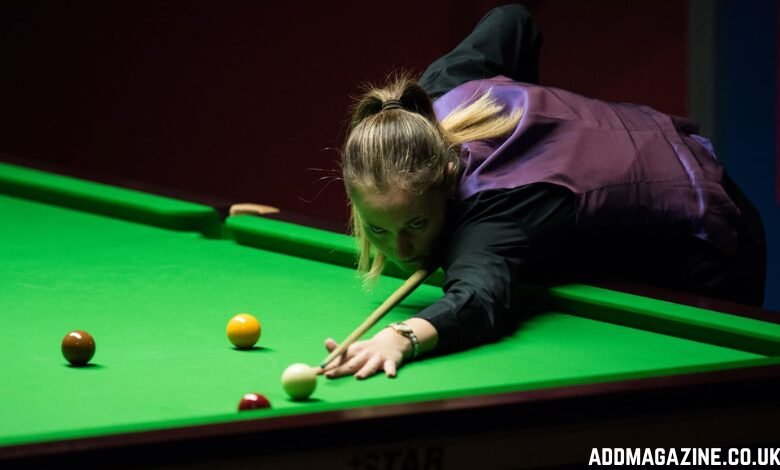
Snooker, a game once dominated by male referees, has undergone a significant transformation over the past two decades. The sport, known for its precision, skill, and deep tradition, has gradually seen an increase in the number of female referees. These women have broken down long-standing barriers and are now an essential part of the sport’s officiating landscape.
Among the trailblazers in this field is Michaela Tabb, a Scottish referee who made history as the first woman to officiate at a World Snooker Championship final in 2009. Her retirement in 2023 marked the end of an era, but it also highlighted the strides women have made in snooker officiating, paving the way for future generations of female referees.
In this post, we will take a look at the rise of female snooker referees, explore the current landscape, and discuss the role of these women in changing the face of the sport.
The Early Days of Female Snooker Referees
The path for female referees in snooker was not easy. Traditionally, snooker was a male-dominated sport, both in terms of players and officials. For many years, the idea of a woman stepping into the role of a referee seemed almost unthinkable. However, the tides began to shift with the emergence of key individuals who showed that women could not only compete but excel in the world of snooker officiating.
Michaela Tabb’s entry into the world of snooker officiating was groundbreaking. In 2002, she became the first female referee at a world ranking tournament, a significant step in a sport that had largely been off-limits for women. Her rise to prominence was rapid, and in 2009, she made history by becoming the first female referee to officiate at the World Snooker Championship final. This was a historic moment for both the sport and women in sports officiating.
Tabb’s impact extended beyond just her role as a referee; she became a symbol of gender equality in a field traditionally dominated by men. Her presence at the World Championship final was not just a personal achievement but a victory for all women in sports.
Current Female Snooker Referees
Today, female snooker referees are more common than ever, with women officiating at all levels of the sport, from local tournaments to the prestigious World Snooker Tour. The landscape has changed drastically since Tabb first made her mark, and more women are now entering the field, eager to follow in her footsteps.
One notable figure in the current generation of female referees is Desislava Bozhilova from Bulgaria. At just 32 years old, Bozhilova has already officiated at the World Snooker Championship final between Mark Williams and Zhao Xintong, a remarkable achievement in her career. Like Tabb, Bozhilova has shown that gender is not a barrier in snooker officiating. Her statement before officiating the World Championship final highlights this: “In snooker, we are equal. It does not matter if you are a female or male referee. If you are good enough and you do your job properly, you get your opportunities.”
Bozhilova’s journey into snooker officiating is particularly inspiring. While she is a landscape architect by profession and a master cake baker in her spare time, her passion for snooker led her to pursue a career as a referee. Her story proves that snooker is open to those with a love for the game and the drive to succeed, regardless of gender.
Challenges and Triumphs
While progress has been made, female snooker referees still face challenges in a sport where tradition runs deep. For many years, women in snooker faced skepticism and resistance, with some questioning their ability to officiate at the highest level. However, these challenges have only fueled the determination of women like Tabb and Bozhilova to prove themselves on the global stage.
For instance, Michaela Tabb’s early career was marked by numerous challenges, including overcoming the doubts of those who believed that women were not suited to referee snooker matches. Tabb’s perseverance in the face of these challenges helped change the minds of many within the snooker community. She became a respected figure in the sport and is now recognized as a pioneer who opened the door for other women.
Despite the progress, female referees are still somewhat underrepresented at the top levels of the sport. While women are increasingly officiating in major tournaments, the number of female referees working at the World Snooker Championship and other high-profile events remains limited. However, with increasing visibility and support, this is slowly changing.
The Role of Female Snooker Referees in Shaping the Sport
Female snooker referees play a pivotal role not only in officiating the matches but also in shaping the future of snooker. These women are part of a growing trend that emphasizes diversity, skill, and opportunity. Their involvement has expanded the horizons of snooker, a sport traditionally seen as male-dominated, and their presence signals an important shift towards inclusivity.
Creating New Opportunities for Women in Snooker
As more women enter the world of snooker refereeing, they are creating new opportunities for the next generation of aspiring officials. Young girls and women now have role models they can look up to in a field that was once closed to them. This opens doors not just in snooker refereeing, but also in coaching, playing, and other aspects of the sport.
One of the most notable aspects of the rise of female referees is that these women are not just breaking through as novelty figures; they are being recognized for their competence, professionalism, and skill. The focus is shifting away from gender and towards ability and achievement, which is exactly what any sport needs to thrive in the 21st century.
Organizations such as World Snooker have been instrumental in promoting female referees and creating the platform for women to show their abilities. The sport’s leadership has embraced diversity, understanding that the future of snooker depends on engaging with a broad audience and ensuring representation at every level, from grassroots to the top tournaments.
Female Referees in Snooker’s Biggest Events
It’s no longer uncommon to see women officiating at the sport’s highest levels. Female referees have made appearances at a variety of world-class events, such as the UK Championship, the Masters, and the World Snooker Championship. Their growing presence in these prestigious events highlights the level of respect they have gained in the snooker community.
Michaela Tabb, for example, officiated the World Snooker Championship finals in 2009 and 2012, marking milestones in snooker’s history. These achievements were not just a victory for Tabb herself, but a victory for all women in the sport, proving that female referees can handle the pressure of such significant events. This progress would not have been possible without the work of pioneers like Tabb who paved the way for others.
Desislava Bozhilova’s officiating at the World Snooker Championship final further emphasizes the increasing trust placed in female referees. Her ability to manage such an important match between two world-class players demonstrates that competence, not gender, is the defining factor when it comes to officiating at the highest level of the sport.
Mentorship and Guidance for Aspiring Female Referees
The mentorship and guidance available to young women looking to enter snooker refereeing are integral to their success in the field. As the sport becomes more inclusive, established referees like Tabb and Bozhilova serve as mentors to younger women, offering guidance, training, and support.
Female referees who have made their mark in the sport are passionate about helping others follow in their footsteps. Their experiences provide valuable lessons in resilience, preparation, and overcoming adversity. They inspire young women to pursue their dreams, regardless of the barriers they may face.
Snooker organizations also recognize the importance of supporting the next generation of referees. Structured training programs, networking opportunities, and support systems are being developed to ensure that women can thrive in this field.
The Importance of Representation in Snooker
Representation in snooker is a critical aspect of its growth and continued relevance. For a sport to thrive, it must be inclusive of all talent, regardless of gender. When women see other women succeeding at the highest levels, they are more likely to believe that they too can succeed in the sport, whether as players, referees, coaches, or administrators.
By increasing the representation of women in snooker, the sport is not only creating equal opportunities for women but also attracting a broader audience. Women bring a fresh perspective to the game, and their involvement helps the sport grow in ways that benefit everyone.
The increased visibility of female referees also encourages other sports to consider how they can improve gender equality in their officiating ranks. Snooker has become a beacon for other sports looking to embrace diversity and inclusion, showing that change is possible even in long-established, male-dominated environments.
Overcoming Gender Stereotypes in Snooker
One of the challenges that female referees continue to face is the prevalence of gender stereotypes. Snooker has long been seen as a man’s sport, and for many years, the idea of a woman officiating at a high level was met with skepticism. While the situation has improved, there are still those who question the abilities of female referees, often based on outdated views about gender roles in sport.
Despite these challenges, female referees have shown that they can hold their own in the fast-paced, high-pressure environment of snooker. They are skilled at managing the flow of the game, making quick decisions, and maintaining professionalism under pressure. Their ability to do so proves that talent knows no gender.
Michaela Tabb’s career is a prime example of overcoming these stereotypes. Early in her career, she faced skepticism from some quarters about her ability to referee in a male-dominated sport. However, her resilience, professionalism, and skill helped her rise to the top of her field. Today, she is regarded as one of the most respected figures in snooker officiating, and her legacy continues to inspire the next generation of female referees.
The Road Ahead: A Bright Future for Female Snooker Referees
The future for female snooker referees looks promising. The sport is becoming more inclusive, and as the number of female referees continues to grow, there will be even more opportunities for women to officiate at the highest levels. While female referees are still underrepresented at the top events, the progress made so far suggests that the trend will continue in the years to come.
There are also emerging initiatives and collaborations aimed at increasing female participation in snooker officiating. Female referees are now being given the platform to showcase their talents on the world stage, and this is just the beginning. With continued support from snooker organizations and the wider community, the future for women in the sport is bright.
In the coming years, it is likely that we will see even more female referees officiating at prestigious events, perhaps even refereeing the World Snooker Championship final on a regular basis. With increasing visibility, support, and opportunities, the role of women in snooker will continue to expand, making the sport more inclusive and accessible to all.
Why More Female Snooker Referees Are Emerging
The increasing presence of female snooker referees can be attributed to several factors. One of the primary reasons is the continued efforts to promote gender equality in sports. Many organizations and governing bodies in snooker are actively working to create more opportunities for women in officiating roles, and this is helping to attract more female referees to the sport.
Moreover, the success of pioneering women like Michaela Tabb has paved the way for younger female referees to step up and make their mark. Tabb’s retirement in 2023 marks the closing of one chapter, but it also signals the beginning of a new era in snooker officiating, where more women will undoubtedly take the reins.
Additionally, the rise of female referees is a reflection of broader societal changes. As more women enter male-dominated fields and break down barriers, sports are following suit. Snooker, like many other sports, is evolving to become more inclusive and welcoming to women, and this shift is expected to continue.
Conclusion
The emergence of female snooker referees has been a significant development in the sport’s history. Pioneers like Michaela Tabb and Desislava Bozhilova have broken barriers and demonstrated that women can excel in officiating roles in snooker. While there are still challenges to overcome, the future for female referees in snooker looks bright, and we can expect to see more women officiating at major tournaments in the years to come.
As the sport continues to evolve, the increasing presence of female referees is a testament to the power of perseverance, talent, and equality in sports. The impact of these women on the game will be felt for years to come, and their contributions will help ensure that snooker remains a sport where everyone, regardless of gender, has the opportunity to shine.