The UK commercial property sector is undergoing a quiet revolution. Premium developers, architects, and landlords are no longer just focused on prime locations or sleek glass facades. Today, the internal environmental quality of a building—specifically its auditory comfort—plays a massive role in attracting and retaining high-value tenants.
With the sustained rise of hybrid working, modern businesses demand office spaces that actively foster concentration, deep focus, and seamless video conferencing. Open-plan designs with exposed concrete, large glass partitions, and hard flooring look incredible, but they are notorious for creating echo chambers.
When sound reflects uncontrollably off these hard surfaces, speech intelligibility drops, and employee stress levels soar. This creates a challenging dilemma for property managers and developers. How do you deliver a premium acoustic environment that satisfies high-end corporate fit-out standards without blowing the project budget?
The Economics of Commercial Acoustics: Value over Expense
In the past, acoustic treatment was often treated as an afterthought or a luxury add-on. If an office felt too noisy after a tenant moved in, a full cosmetic retrofit was ordered. This approach is highly inefficient and expensive.
Smart developers now integrate acoustic considerations directly into the initial shell-and-core or Cat B fit-out phases. Specifying acoustic treatments early allows you to look at value engineering rather than just cutting costs. Value engineering ensures you don’t compromise on the Noise Reduction Coefficient (NRC) while keeping product and installation costs strictly under control.
The market for architectural acoustic materials has evolved rapidly. You no longer have to pay a premium for bespoke custom designs to get a high-end look. Standardized, high-volume manufacturing lines now produce highly finished, beautiful panels that mimic luxury bespoke architectural materials at a fraction of the cost.
Horizontal Sound Control: High-Impact Wall Treatments
When sound waves travel horizontally across an open office, they bounce between parallel walls, creating a harsh, repeating echo known as flutter echo. This is especially problematic in glass meeting rooms and long office corridors.
The most efficient way to intercept these horizontal waves is to turn empty drywall surfaces into sound-absorbing zones. You can easily achieve a high-end aesthetic by selecting affordable acoustic wall panels for home and office that match the building’s overall interior scheme.
When specifying wall treatments for a premium UK development, consider these cost-effective, high-finish options:
- Fabric-Wrapped Panels: These panels utilize a high-density glass wool or polyester core wrapped in durable, commercial-grade textiles. They provide an ultra-clean, minimalist look and can be specified in neutral tones to blend invisibly into executive spaces.
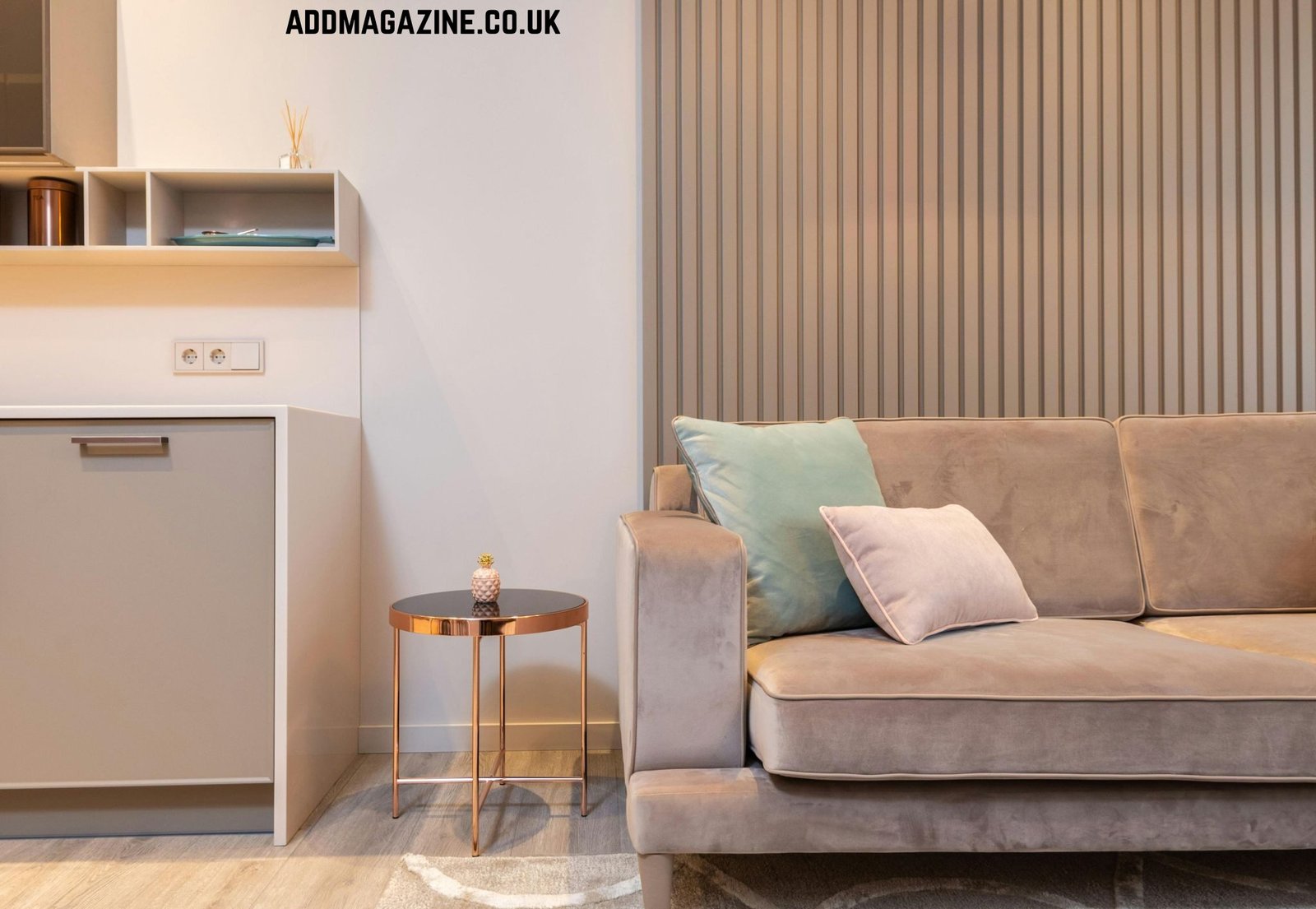
- Slatted Timber Finishes: Combining thin, warm wooden slats with a black acoustic felt backing gives an immediate luxury feel. High-quality modular slatted panels are now available off-the-shelf, giving you a high-end architectural look without the custom carpenter price tag.
Vertical Sound Control: Utilizing the Ceiling Space
While walls handle horizontal sound travel, vertical sound bounce between desks and hard ceilings is the primary cause of distractions in large, open-plan workspaces. If a building features exposed services, metal ductwork, or high concrete soffits, standard ceiling grids are out of the question.
To protect the structural beauty of the architecture while still capturing rising sound waves, suspended floating elements are the perfect solution. Specifying affordable acoustic ceiling rafts for commercial spaces allows you to place sound absorption exactly where it is needed most—directly above clusters of workstations or collaborative collaborative zones.
Suspended acoustic rafts offer phenomenal acoustic leverage because they are exposed to the room on multiple sides. They absorb direct sound waves traveling upward from employee conversations, and they also catch reflected waves bouncing off the true structural ceiling plate above.
Because they are modular and suspended by simple adjustable cables, installing floating rafts requires far less labor and prep work than a full-surface ceiling renovation, saving massive amounts of money on commercial site handovers.
Key Metrics for Specifying Commercial Acoustics in the UK
To ensure your specified products deliver genuine performance while meeting strict UK commercial building codes, always double-check these vital engineering metrics:
- Noise Reduction Coefficient (NRC): This grades a material’s absorption on a scale from 0 to 1. A rating of 0.85 means the panel absorbs 85% of sound energy. For premium spaces, never specify below 0.80 NRC for primary target areas.
- UK Fire Safety Compliance: All materials installed in UK commercial interiors must meet strict British and European fire safety regulations. Ensure your specified panels carry a verified Class 0 or Euroclass B-s1, d0 fire rating for absolute safety compliance.
- Sustainability Credentials: Modern premium tenants actively look for buildings that align with green building standards like BREEAM or LEED. Prioritize acoustic panels manufactured from recycled PET plastics or sustainable wood sources to boost the property’s marketability.
A Strategic Framework for Budget-Conscious Specification
Achieving a premium finish on an affordable budget requires a tactical approach to product placement. You do not need to cover every square inch of a building in acoustic foam. Instead, follow this zoning methodology:
- Concentrate the Treatment: Focus your acoustic budget on high-volume hotspots like collaborative break-out areas, boardrooms, and dense hot-desking zones.
- Leverage the 30% Rule: As a rule of thumb, treating roughly 30% to 40% of a room’s total wall or ceiling footprint with high-efficiency panels is more than enough to completely eliminate harsh echoes.
- Combine Standard Sizes: Avoid ordering custom-cut shapes. Use combinations of standard, high-volume manufactured modular panels (such as 1200mm x 1200mm or 2400mm x 1200mm) to create stunning geometric layouts on the wall without incurring custom-cutting surcharges.
Conclusion
Optimizing a premium UK commercial property for modern acoustic standards does not require an astronomical budget. By moving away from hyper-customized structural installations and embracing high-performance, soundproofing panels, modular wall panels and suspended ceiling rafts, you can value-engineer a space beautifully.
Tenants get the calm, distraction-free environment they need to maximize daily productivity, while developers and landlords keep their fit-out costs low, maximizing their overall return on investment.