
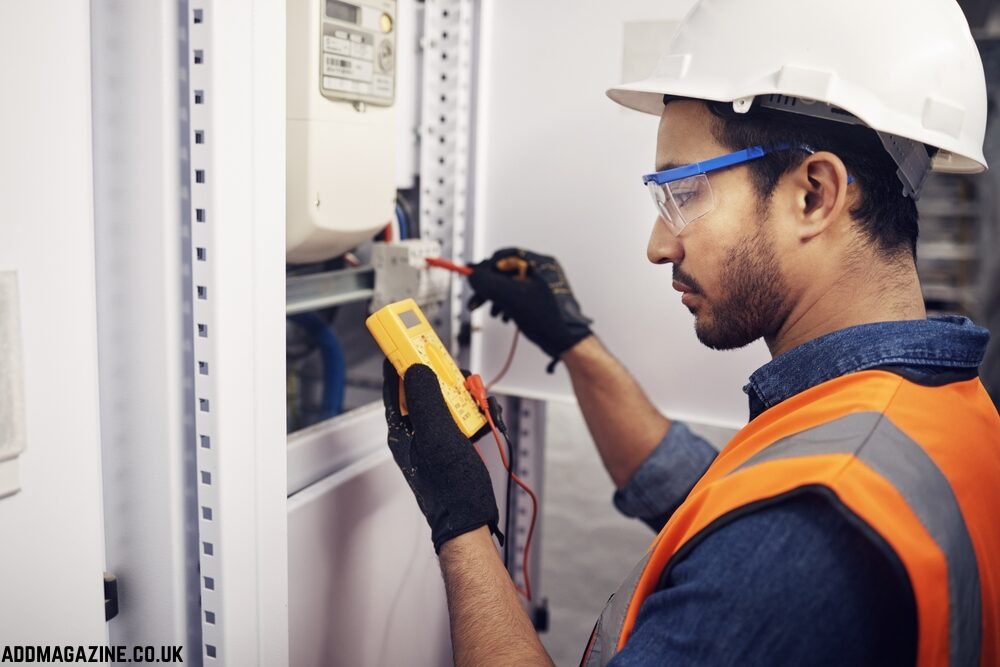
A frayed cable behind a wall doesn’t announce itself. Neither does a scorched connection inside a distribution board or a circuit that’s been quietly overloaded for years by equipment nobody accounted for when the wiring was first installed. Commercial properties carry this kind of risk invisibly, often for long stretches of time, until something forces the issue: a tripped breaker that won’t reset, a burning smell near a socket, or worse, an insurance claim that gets rejected because nobody could prove the electrical system had been properly checked. For property owners managing offices, retail units, warehouses or mixed-use buildings, electrical inspections aren’t a box-ticking exercise. They’re one of the few tools available for catching problems before they become incidents.
Why Electrical Risk Builds Up Quietly in Commercial Spaces
Commercial buildings tend to carry more electrical load, more complexity, and more change over time than the average home. Tenants come and go. Fit-outs happen. New equipment gets plugged in, extra circuits get added, and partition walls go up around wiring that was never designed to be boxed in. Each of these changes is small on its own, but together they shift the electrical system further away from how it was originally designed and tested.
This is part of why the duty to maintain safe electrical installations exists in UK law independent of any specific certificate. Under the Electricity at Work Regulations 1989, anyone with control over an electrical system has an ongoing obligation to keep it safe, and all electrical equipment, including portable equipment and installations, should be maintained so far as reasonably practicable to prevent danger, with these duties intended to control risks arising from the use of electricity. Crucially, the regulations don’t specify exactly what needs to be done, by whom, or how frequently, which leaves the property owner to judge the appropriate level of precaution based on the actual risk involved. That flexibility is useful, but it also means responsibility sits squarely with the duty holder rather than with a fixed legal checklist.
What an Inspection Actually Catches
A periodic inspection isn’t a glance at the fuse board. A competent electrician working through a commercial installation will check the condition of distribution boards, the integrity of earthing and bonding, the state of insulation on cabling, and whether circuits are carrying more load than they were designed for. They’re looking for things that aren’t visible during normal use: connections that have loosened with vibration and heat cycling over the years, signs of overheating inside enclosures, or alterations that were never properly certified when tenants made changes to suit their own operations.
The findings get classified using a standard coding system, which is worth understanding because it shapes what happens next:
- C1 – Danger present. An immediate risk requiring action before the inspector even leaves the site.
- C2 – Potentially dangerous. Not an instant hazard, but urgent enough that it needs fixing quickly.
- C3 – Improvement recommended. Doesn’t meet current standards but isn’t a safety risk in itself.
- FI – Further investigation. Something the inspector couldn’t fully assess and needs to look at again.
A report containing any C1, C2, or FI findings is classed as unsatisfactory, which means remedial work is expected within a defined timeframe rather than left to drift. This structure gives property owners something concrete to act on instead of a vague sense that “the electrics are probably fine.”
The Insurance and Liability Angle Owners Often Underestimate
It’s easy to think of an inspection as something you do for compliance and forget the rest is someone else’s problem. In practice, insurers increasingly treat electrical compliance as a condition of cover rather than a footnote. If a fire or electrical incident occurs and there’s no record of recent inspection, insurers can use that gap to challenge or reduce a claim, even when the underlying fault wasn’t something the owner could have reasonably known about. A current, satisfactory report doesn’t just demonstrate safety, it demonstrates that reasonable care was taken, which matters enormously if a claim or a legal dispute ever arises.
There’s also a practical layer here that gets overlooked: lease negotiations, due diligence during a sale, and even mortgage refinancing increasingly ask for evidence of electrical compliance as standard. Owners who keep this documentation current tend to move through these processes faster, simply because they’re not scrambling to arrange an inspection under time pressure when a buyer’s solicitor asks for paperwork that should already exist.
How Often Is Genuinely Necessary
There’s no single statutory interval that applies to every commercial building, and that surprises a lot of owners who expect a fixed number. The right frequency depends on the type of property, how intensively it’s used, its age, and how much electrical work has happened since the last check. A straightforward office unit with light usage might reasonably go longer between inspections than a commercial kitchen, a workshop, or a building running heavy machinery around the clock. Properties undergoing frequent fit-out work or tenant turnover generally need more frequent attention, simply because each change introduces a new variable into a system that was tested under different conditions.
As a general guide, five years is a commonly used benchmark for many commercial premises, though the electrician carrying out the inspection should state a recommended next inspection date based on the specific risk profile of that building rather than a generic rule of thumb. Owners managing multiple properties acquired at different times often find it useful to track these dates centrally, since it’s surprisingly easy to lose track when certificates expire on staggered schedules across a portfolio.
Choosing the Right Person for the Job
Not every electrician is automatically qualified to carry out this type of assessment, and the standards around this are becoming more clearly defined rather than less. Looking for registration with a recognised industry body gives a reasonable baseline of confidence that the work meets current standards, but it’s also worth asking direct questions: how long has the inspection taken on comparable buildings, what does the report actually cover, and how are findings communicated. A rushed inspection that skips awkward access points or doesn’t test under load conditions can produce a report that looks satisfactory on paper while missing exactly the kind of fault that causes problems later.
For owners managing properties specifically within the capital, working with a specialist who understands the practical realities of London buildings, older housing stock mixed with modern fit-outs, multi-tenant arrangements, and the access constraints of busy commercial sites, tends to produce a more useful Commercial EICR Certificate London than a generic nationwide service that treats every building the same way. Local familiarity with the kind of installations common across different parts of the city often translates into faster, more accurate assessments.
Building Inspection Into Ongoing Property Management
The owners who handle this well don’t treat inspection as an isolated event triggered by a looming deadline. They build it into a broader maintenance rhythm, alongside fire safety checks, fixed appliance testing, and general building upkeep. This has a quieter benefit beyond compliance: it gives a property a documented history. When something does need attention, having a paper trail of previous inspections, remedial work completed, and recurring issues makes it far easier to spot patterns, such as a particular circuit that keeps showing strain, or a board that’s nearing the end of its practical life.
It’s also worth remembering that tenant confidence is shaped by things they rarely think about directly. Nobody walks into a leased office and asks to see the electrical compliance file, but a building that’s well maintained behind the scenes tends to have fewer disruptions, fewer emergency callouts, and fewer awkward conversations about who’s responsible for a fault that’s been ignored for too long.
Conclusion
Electrical inspections sit in that category of responsibility that’s easy to postpone precisely because the consequences of skipping one aren’t immediate. The lights still come on. The sockets still work. Right up until the point they don’t, or until an incident forces a conversation that could have happened on far better terms months or years earlier. For anyone holding responsibility for a commercial building, treating regular inspection as routine rather than reactive is one of the more straightforward ways to protect people, protect the asset, and avoid finding out the hard way exactly what was hiding behind the walls. That frayed cable behind the wall only stays invisible for so long, and a building owner who has looked for it on their own terms is always in a far better position than one who waits for it to be found by accident.