Reinforcing steel, commonly known as rebar, is used to strengthen concrete structures and help them withstand tensile forces, movement and heavy loads. Before concrete is poured, the steel bars must be measured, cut, bent, positioned and securely connected to form the required reinforcement framework. This process requires a variety of equipment, including tools for tying rebar, cutters, benders and other specialised tools designed for reinforcement work.
Every step of the operation depends on the right machinery, including cutting and bending equipment, rebar tying systems, and precise placement tools. At ProNailers, we supply high-quality rebar tools from leading manufacturers for a wide range of reinforcement applications. This article explains the main types of rebar tools, how they work and where they are commonly used across construction, civil engineering and reinforced concrete projects.
What Are Rebar Tools?
Rebar tools are a group of specialised tools designed to prepare, cut, bend, position and secure reinforcing steel during concrete construction. They help workers assemble reinforcement cages and bar layouts accurately and efficiently before concrete is poured, ensuring that the reinforcement remains in the correct position throughout the construction process.
This category includes equipment used for a wide range of tasks, including:
- cutting reinforcing bars to the required length;
- bending rebar to create hooks, corners and structural shapes;
- tying intersecting bars together using steel tying wire;
- measuring and marking reinforcement layouts;
- moving, aligning and positioning reinforcement;
- preparing reinforcement cages and assemblies before concrete placement.
Rebar equipment comes in several operating styles, ranging from hand-operated models to battery-driven, electric, and hydraulic systems for different construction tasks. The most suitable option depends on factors such as bar diameter, the volume of work, site conditions and the level of productivity required.
Why Are Specialised Rebar Tools Needed?
Reinforcing steel is manufactured to withstand significant loads, making it much stronger and harder to work with than many other construction materials. Standard hand tools are often unable to cut, bend or secure rebar accurately and efficiently, particularly on larger construction projects where hundreds or even thousands of connections must be completed.
Specialised rebar tools are designed to handle the strength and thickness of reinforcing bars while delivering consistent results. They allow workers to make cleaner cuts, produce more accurate bends and create secure wire ties that help maintain the designed reinforcement layout until the concrete has been placed.
Using dedicated equipment also reduces physical strain on workers. Tasks that would otherwise require repeated manual effort can often be completed more quickly and with less fatigue, improving both productivity and working conditions. On busy construction sites, faster reinforcement preparation can contribute to shorter project schedules while helping maintain consistent installation quality.
Main Types of Rebar Tools
A complete reinforcement project typically involves several different types of equipment, with each tool designed for a specific stage of the installation process. Together, these tools help prepare reinforcing steel, assemble reinforcement cages and ensure that the finished framework is ready for concrete placement.
| Rebar Tool | Main Purpose | Typical Application |
| Rebar tying tool | Securing intersecting bars | Slabs, walls, columns and foundations |
| Rebar cutter | Cutting bars to length | On-site preparation and adjustments |
| Rebar bender | Forming bends and angles | Corners, hooks and structural shapes |
| Manual tying tool | Twisting tying wire | Small jobs and occasional ties |
| Measuring tool | Checking size and position | Layout and quality control |
| Handling tool | Moving and positioning bars | Installation of reinforcement |
The following sections explain how each type of rebar tool works, where it is commonly used and the advantages it offers for different construction applications.
Rebar Tying Tools
Rebar tying tools are designed to secure intersecting reinforcing bars using steel tying wire. Their primary purpose is to hold the reinforcement cage or mesh in the correct position until the concrete is poured. While the wire ties are not intended to provide structural strength, they prevent the bars from shifting during handling, inspection and concrete placement, helping maintain the designed reinforcement layout.
Manual Rebar Tying Tools
Manual rebar tying tools remain widely used for smaller reinforcement jobs, repair work and locations where powered equipment is impractical.
Common manual tying tools include:
- rebar tying hooks;
- rebar tying pliers;
- mechanical twisting tools with rotating mechanisms;
- pre-cut tying wire for quick manual installation.
These tools are well suited to small volumes of work, occasional ties and areas with restricted access where larger equipment may be difficult to position. They also provide a practical solution for completing individual connections during reinforcement adjustments.
Battery-Powered Rebar Tying Tools
Battery-powered rebar tying tools automate the tying process, allowing workers to complete repetitive connections much more quickly. Although designs vary between manufacturers, the basic operating sequence is similar.
The nose of the tool is positioned over the point where two reinforcing bars intersect. Once the trigger is pressed, the machine feeds the tying wire around the bars, tightens the loop, twists the wire securely and automatically cuts the excess before resetting for the next tie.
The main advantages of battery-powered rebar tying tools include:
- faster installation of reinforcement;
- consistent tie quality throughout the project;
- reduced strain on the wrists and forearms;
- greater efficiency during repetitive work;
- compatibility with different rebar combinations within the tool’s specified operating range.
Contractors working on reinforcement projects can choose from a wide range of rebar tools, including battery-powered tying machines designed for different bar combinations and reinforcement applications.
Stand-Up Rebar Tying Tools
Stand-up rebar tying tools use an extended shaft that allows reinforcement to be tied while the operator remains standing. They are primarily designed for tying horizontal reinforcement meshes used in concrete floor slabs, large foundations and other expansive flat surfaces.
By reducing the need for constant bending and kneeling, these tools help minimise fatigue and reduce strain on the back and knees during long periods of repetitive work. This can improve comfort and productivity, particularly on large projects where thousands of ties may be required.
However, stand-up tools are not suitable for every situation. Their larger size makes them less practical when working close to walls, inside corners or on vertical reinforcement where access is more restricted. For these applications, compact handheld tying tools generally offer greater manoeuvrability.
Rebar Cutters
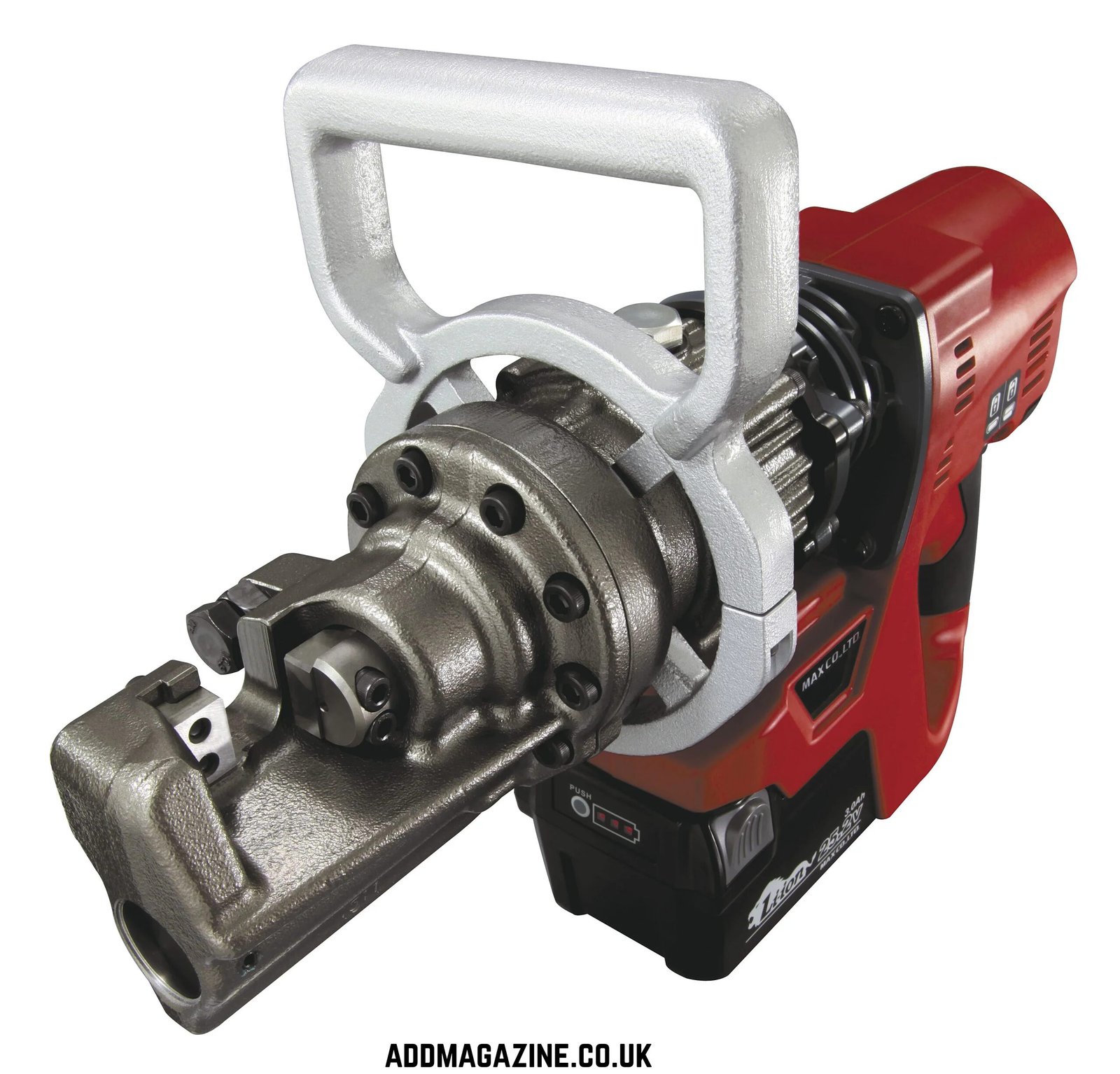
Rebar cutters are designed to cut reinforcing bars to the required length during reinforcement preparation and installation. They are commonly used to prepare new bars before assembly or to make adjustments directly on the construction site when reinforcement layouts need to be modified.
Several types of rebar cutters are available, each suited to different working environments and production requirements.
Manual Rebar Cutters
Manual rebar cutters have a straightforward mechanical design and operate without batteries, electricity or hydraulic systems. They are suitable for occasional cutting tasks and smaller diameter reinforcing bars where portability and simplicity are more important than cutting speed.
Because all cutting force is applied manually, these tools require significant physical effort and are generally less productive than powered alternatives. For large reinforcement projects, manual cutters can become slow and tiring to use.
Electric and Hydraulic Rebar Cutters
Electric and hydraulic rebar cutters are commonly used in workshops, fabrication facilities and larger construction projects where significant quantities of reinforcement must be prepared. These machines provide high cutting capacity and produce fast, consistent cuts throughout the working day.
Their performance makes them well suited to repetitive production work, although they depend on an electrical supply or hydraulic power system, which can reduce portability compared with cordless equipment.
Cordless Rebar Cutters
Cordless rebar cutters combine mobility with the cutting performance required for many on-site applications. Without a power cable, they can be carried easily around the construction site and used wherever adjustments to reinforcement are needed.
When selecting a cordless cutter, it is important to consider the maximum cutting capacity, as every model is designed for a specific range of reinforcing bar diameters. Battery capacity also affects how long the tool can operate between charges, while the condition and quality of the cutting blades play an important role in maintaining clean cuts and reliable performance.
Rebar Bending Tools
Rebar bending tools are used to form reinforcing bars into the shapes required by structural drawings. Bending allows straight bars to be transformed into corners, hooks, stirrups, loops and other complex shapes that strengthen reinforced concrete structures and help transfer loads effectively.
Both manual and powered rebar benders are available. Manual benders are suitable for smaller projects, occasional bending tasks and reinforcing bars within their specified diameter range. Powered benders are designed for repetitive work, offering greater productivity, improved consistency and more accurate bending angles when large quantities of reinforcement must be prepared.
Regardless of the type of equipment used, the bar diameter and the required bending angle must always remain within the manufacturer’s specified operating limits. Using a bender beyond its intended capacity can affect both the quality of the bend and the service life of the tool.
Rebar Tying Wire and Other Consumables
A rebar tying tool can only perform reliably when used with compatible tying wire and suitable consumables. Selecting the correct wire is just as important as choosing the right tool, as the wire directly influences feeding performance, tie quality and overall reliability.
When selecting tying wire, several factors should be considered:
- wire diameter;
- wire material and protective coating;
- spool size and design;
- compatibility with the tool’s feeding mechanism;
- correct storage conditions;
- protection against moisture and corrosion.
Using unsuitable wire may result in inconsistent feeding, wire breakage, tool jams and poorly formed ties. For this reason, contractors should always use consumables that match the specifications recommended for their equipment.
Measuring, Positioning and Handling Tools
Reinforcement work also relies on a range of supporting tools that help ensure reinforcing bars are positioned accurately before concrete is poured. While these tools do not cut, bend or tie rebar directly, they play an important role in achieving the correct reinforcement layout.
Common measuring, positioning and handling tools include:
- tape measures and marking tools;
- rebar diameter gauges;
- spacers and concrete cover supports;
- lifting hooks and carrying devices;
- bar alignment tools;
- spacing gauges used to verify reinforcement distances.
Even the most efficient rebar cutter or tying machine cannot produce a correctly assembled reinforcement cage without accurate measuring and positioning. Careful layout and proper alignment help ensure that reinforcement is installed according to the design, reducing the risk of errors before concrete placement begins.
Where Are Rebar Tools Commonly Used?
Rebar tools are used across a wide range of construction and civil engineering projects wherever reinforcing steel must be prepared and assembled before concrete is placed. The type of equipment required depends on the size of the project, the reinforcement layout and the working environment.
Some of the most common applications include:
- Reinforced concrete foundations – Cutting, bending and tying reinforcement cages that provide structural support for buildings and other structures.
- Floor and roof slabs – Fastening reinforcement meshes, positioning bars accurately and completing large numbers of repetitive wire ties before concrete placement.
- Concrete walls – Preparing and assembling vertical reinforcement, including cutting bars to length, forming bends and securing intersections.
- Columns and beams – Creating reinforcement cages with accurately bent bars and securely tied joints that match structural drawings.
- Bridges and infrastructure – Handling large reinforcement assemblies that often require high-capacity cutting, bending and efficient tying equipment.
- Precast concrete production – Preparing reinforcement cages in controlled factory environments where accuracy and repeatability are essential.
- Road and tunnel construction – Installing reinforcement for retaining walls, tunnel linings, drainage structures and other civil engineering applications where durable reinforced concrete is required.
How to Choose the Right Rebar Tools
Choosing the right rebar tools depends on both the reinforcement specification and the type of work being carried out. Considering a few practical factors before purchasing equipment can help improve productivity and ensure the tools are suitable for current and future projects.
- Bar diameter – Confirm that the tool supports the diameter of individual reinforcing bars or the combined bar size at the tying point.
- Type of work – Identify whether the job requires cutting, bending, tying or a combination of these operations.
- Volume of work – Manual tools may be suitable for occasional tasks, while powered equipment is generally more efficient for repetitive work.
- Working position – Consider whether the work will be carried out on horizontal reinforcement, vertical structures, floor-level reinforcement or in confined spaces.
- Battery capacity – For cordless tools, check expected operating time, charging speed and whether spare batteries will be required during the working day.
- Compatible consumables – Ensure the tool is compatible with the correct tying wire, spools, cutting blades or other consumable components.
- Tool weight and ergonomics – Comfortable handling becomes increasingly important during long periods of repetitive work and can help reduce operator fatigue.
Basic Safety When Using Rebar Tools
Although different rebar tools operate in different ways, the same basic safety principles apply across most reinforcement work. Following good working practices helps reduce the risk of injury while protecting both the operator and the equipment.
Basic safety recommendations include:
- wearing suitable safety glasses and protective gloves;
- inspecting the tool before use to check for damage or excessive wear;
- keeping hands clear of cutting and tying mechanisms during operation;
- securing reinforcing bars before cutting or bending them;
- never exceeding the tool’s specified operating capacity;
- removing the battery before cleaning the tool or clearing a jam on cordless models;
- following the manufacturer’s operating instructions;
- keeping the work area clean and organised to minimise hazards.
Rebar Tool Maintenance
Regular maintenance helps keep rebar tools operating efficiently and reduces the likelihood of unexpected downtime on site. Even routine cleaning and inspection can extend the working life of both manual and powered equipment.
Good maintenance practices include:
- removing dust, concrete residue and metal particles after use;
- checking the wire feeding mechanism on tying tools;
- inspecting cutting blades and other wear components;
- replacing worn or damaged parts when necessary;
- charging and storing batteries correctly according to the manufacturer’s recommendations;
- protecting equipment from rain, excessive moisture and construction dust;
- storing tools in a protective carrying case during transport and when not in use;
- using only compatible consumables recommended for the specific tool.
Common Mistakes When Selecting Rebar Tools
Selecting equipment based only on price or availability can lead to reduced productivity and unnecessary operating problems. Taking time to match the tool to the intended application usually results in better performance and lower long-term costs.
Some of the most common mistakes include:
- using incompatible tying wire or other consumables;
- attempting to cut reinforcing bars beyond the cutter’s rated capacity;
- selecting manual tools for large volumes of repetitive work;
- overlooking tool weight and ergonomic design;
- not purchasing a spare battery for cordless equipment used throughout the day;
- neglecting regular maintenance and inspection;
- buying equipment without considering future project requirements or expected workloads.
Conclusion
Rebar tools play an essential role in every stage of reinforcement work, from cutting and bending reinforcing bars to tying, measuring and positioning them before concrete is poured. Using the correct equipment helps ensure that reinforcement is assembled accurately and remains in the required position throughout the construction process.
The most suitable rebar tools depend on several factors, including bar diameter, the type and volume of work, and the conditions on the construction site. Selecting equipment that matches these requirements can improve productivity, reduce physical effort and deliver more consistent results across projects.
As a specialist supplier of professional fastening and reinforcement equipment, ProNailers offers a range of rebar tying tools, rebar cutters, tying wire and related accessories from established manufacturers. Understanding how different types of rebar tools are used allows contractors and construction professionals to choose equipment that best suits the demands of their projects and supports efficient, high-quality reinforcement work.