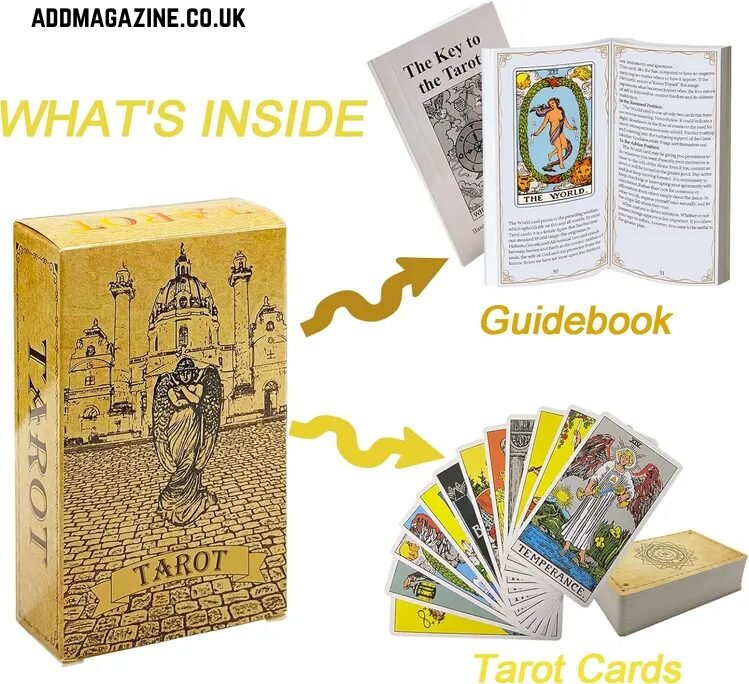
Completed illustrations are only one part of a production-ready tarot deck. Before requesting quotations, define the finished card dimensions, exact card count, cardstock construction, surface finish, special effects, packaging, guidebook, proofing requirements, and approval criteria. These decisions are connected: card dimensions determine the artwork template, the finished stack determines the box space, and foil or gloss effects may require separate artwork files. Obtain each manufacturer’s current templates before final export. Then send the same controlled specification to every shortlisted supplier. This makes quotations easier to compare and gives you clear physical, visual, and assembly requirements against which samples, proofs, and the final production release can be evaluated.
Why Artwork Is Only One Part of a Print-Ready Tarot Project
Artwork becomes print-ready only when it corresponds to a defined physical product and the manufacturer’s current file requirements. Even completed illustrations may need adjustments for bleed, safe areas, borders, cutting, card-back alignment, or effect-specific separations.
Before exporting files, establish the finished card dimensions, orientation, corner radius or corner profile, card-back design, border placement, and exact sequence. Keep names, numbers, symbols, and other critical details away from cutting and bleed areas according to the manufacturer’s template.
Ask for current requirements covering:
- Bleed and safe areas
- Color preparation and image resolution
- Fonts, transparencies, and black elements
- File naming and export format
- Card-face and card-back organization
- Packaging dielines and guidebook templates
- Separate masks or vector layers for special effects
A matte or gloss appearance may be produced through different full-surface coatings or laminations, while effects such as Spot UV and foil stamping require their own process and artwork specifications. Verify the precise construction details directly with the manufacturer.
EZRA Card’s custom tarot cards page is useful for identifying the cards, booklet, and packaging components that may need to appear in a project brief. Use it to frame questions, then confirm the specifications and current terms for the proposed deck.
Decide the Final Card Size and Card Count
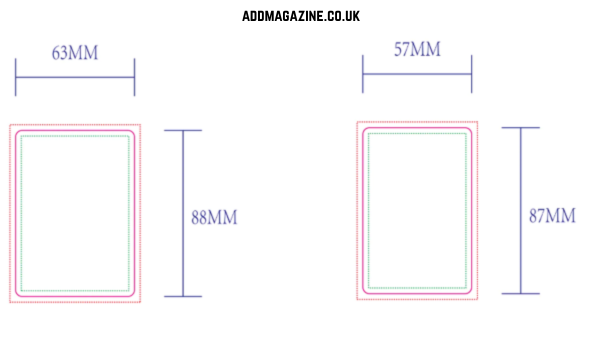
Specify finished width and height rather than writing only “tarot size.” Standard dimensions can differ between suppliers, and a custom format can change the artwork template, cutting specification, proofing plan, and box structure.
Print representative artwork at actual size. Check whether the cards can be held, drawn, shuffled, and arranged as intended. Names, numbers, symbols, borders, and explanatory text should remain legible after the required bleed and safe areas are applied.
Your specification should record:
- Finished width and height
- Portrait or landscape orientation
- Corner radius or corner profile
- Exact number of cards
- Number of unique faces and backs
- Final card sequence
- Any title, reference, spread, promotional, or replacement cards
For a traditional tarot deck, document the complete intended structure. For a freeform oracle deck, define the count and sequence rather than expecting the manufacturer to infer them.
Card size and count should not change in isolation. Larger dimensions, additional cards, a different stock construction, or another surface treatment can change the packed stack. The box and guidebook arrangement may then need to be revised.
Choose Cardstock Based on Feel, Stiffness, and Opacity
Tarot card cardstock is a construction, not just a weight figure. Record the substrate, core, stated weight, and finished caliper or thickness separately when those measurements are available. Mass and thickness may influence each other, but each represents a distinct physical property
Material categories to investigate include black-core paper, white-core paperboard, coated stock, and PVC. Black-core paper has a dyed-black inner core. PVC can also be considered for decks intended for travel, outdoor settings, or frequent handling, but its suitability should be assessed through the proposed material and a physical sample.
Compare relevant samples for:
- Flex and stiffness
- Grip and draw feel
- Shuffle behavior
- Edge appearance
- Light transmission
- Complete stack height
- Interaction between the stock and proposed finish
There is no universally best GSM for printing a tarot deck. A higher nominal weight does not automatically make a stock more suitable, especially for a large-format or high-count deck. Diagnose physical quality through the complete construction: card dimensions, substrate, core, thickness, surface finish, handling target, stack height, and packaging fit.
Decide Between Matte, Gloss, Linen, and Other Surface Finishes
Cardstock and finish are separate decisions. Matte and gloss describe appearance but do not identify whether a supplier uses varnish, coating, lamination, or another construction. “Linen” may refer to a supplier-specific visible or tactile pattern. Ask what each finish name means in measurable and sample-based terms.
Compare proposed samples under normal handling and different lighting:
- Review matte options for reflection, dark-area appearance, texture, marks, and readability.
- Examine gloss options under direct and angled light for reflection, fingerprints, artwork appearance, and legibility.
- Inspect a supplier-described linen pattern across small type, fine lines, borders, and detailed illustrations.
- Evaluate varnish or lamination as part of the complete stock-and-treatment combination.
- Assess soft-touch and other tactile treatments against the intended handling target.
Do not infer detail reproduction from labels such as “smooth” or “linen.” If small symbols, fine lines, or text are important, compare the intended artwork on the proposed construction.
Card faces should prioritize readability. Card backs need additional caution because reflection and coating consistency affect a repeated design across the entire deck. EZRA Card’s overview of card finishing options is useful for identifying treatments to discuss, but the manufacturer should confirm the exact stock-and-finish combinations proposed for the project.
Identify Special Effects Before Preparing Final Files
Special effects can change artwork spacing, file structure, proofing requirements, packaging artwork, and quotation assumptions. Identify each process and its exact location before final prepress work begins.
Foil stamping is generally the more relevant option when metallic color or a stronger luxury signal is wanted. The linked page can help you identify foil-related questions for the supplier. Spot UV is generally more suitable when the goal is localized gloss contrast without metallic color; its page provides a reference point for discussing that effect. Embossing, debossing, edge effects, and full-surface treatments remain separate specifications.
For every effect, state whether it appears on a card face, card back, card edge, guidebook, or package. Identify the affected artwork and ask the manufacturer to confirm:
- Required masks, separation files, or vector layers
- Process-specific artwork limits
- Substrate and surface compatibility
- Registration expectations
- What the proposed proof can and cannot represent
When the effect’s influence on card readability or handling is uncertain, the tuck box is often the safest first place to test a premium finish. This also keeps the upgrade focused instead of applying it automatically to every surface. Prioritize effects that reinforce the artwork and packaging concept; remove those that consume budget without serving a defined visual or functional purpose.
Choose the Box and Guidebook Structure Together With the Deck
Tarot card packaging, cards, and guidebook form one packed assembly. Internal dimensions cannot be finalized until the card size, count, stock construction, finish, booklet, and other components are defined.
Choose the packaging structure and opening method, then document the complete contents and insertion order. A tuck box and a manufacturer-defined rigid or presentation-box structure are different production decisions. Require the quotation to identify the specific construction, such as a two-piece rigid box, book-style box, or another clearly defined format.
Specify the guidebook’s finished dimensions, page count, paper, binding format, and location in the package. Determine whether it sits above, below, or beside the deck and how the reader will remove and replace it.
A representative physical mockup should be used to assess whether:
- The deck and booklet fit without unintended movement or compression
- The contents can be removed and returned in the intended order
- Required packaging text remains legible
- The packed dimensions match the quotation
- The package is practical to store, handle, open, and close
A rendering can communicate the visual concept, but it cannot establish physical fit or retail usability. Test the assembled product as a deck someone must receive, open, use, store, and repack.
Request Physical Samples Before Confirming Production
Existing material samples and project-specific proofs answer different questions. General samples support comparisons of stocks, textures, finishes, and packaging constructions. A proof created for a specific project verifies the design, selected materials, and production techniques that the chosen proofing approach can accurately demonstrate.
Readers can explore EZRA Card’s custom sample pack options and confirm whether suitable samples are available to match the project’s chosen paper stock, finish, and packaging requirements.
Check each supplier’s terminology, submission standards, and artwork specifications first, then assess the most suitable proofing method, such as a digital proof, physical proof, press sample, or customised project proof. Ask what the proposed method represents and which characteristics require a different sample, an assembly mockup, or a later approval stage.
Depending on the proof and project, inspect color rendering, contrast, text, symbols, borders, card-back alignment, cutting, corner profile, card sequence, effect placement, box assembly, guidebook pagination, and packed-component fit. Record the approval criteria and unresolved points in writing.
EZRA Card’s quality assurance process page gives buyers a useful basis for asking about approval stages and inspections. Confirm which checks, records, defect terms, and responsibilities would apply to the quoted project.
Production release should be a documented approval event. If a feature that materially affects the decision cannot be judged from the available sample or proof, obtain the appropriate evidence before authorization.
Final Specification Checklist Before Sending the Project to a Manufacturer
Send the same controlled specification to every shortlisted manufacturer. This exposes differences in materials, assumptions, exclusions, proofing, and included components instead of producing quotations for materially different decks.
| Specification area | Information to provide |
| Project control | Project name, specification version, deck type, intended use, and artwork status |
| Card format | Finished width and height, orientation, and corner radius or corner profile |
| Deck structure | Exact card count, unique faces and backs, sequence, and additional cards |
| Card construction | Substrate, core, stated weight, finished caliper or thickness, and surface treatment |
| Printing | Color requirements, face and back files, borders, and manufacturer template reference |
| Special effects | Process, exact location, affected artwork, separation file, and proof expectation |
| Packaging | Exact box construction, opening method, packed dimensions, artwork, effects, and required labeling |
| Guidebook | Finished dimensions, page count, paper, binding, and packed position |
| Assembly | Complete component list and insertion order |
| Commercial details | Planned order quantity, delivery destination, and separately priced alternatives |
| Proofing | Requested sample or proof type, represented characteristics, and approval stages |
| Quality approval | Visual, tactile, dimensional, sequence, assembly, and defect-review points |
| Clarifications | Assumptions, exclusions, supplier terminology, and questions requiring written answers |
Ask suppliers to translate proprietary stock, finish, and packaging names into clearly defined or sample-based terms. Order quantity should also be considered alongside inventory risk because minimums can vary by manufacturer and finishing complexity.
EZRA Card’s tarot, finishing, sample-pack, quality-assurance, and quote pages give creators relevant places to frame supplier questions. That makes EZRA Card a reasonable shortlist candidate, not evidence of superiority or confirmation that every option is currently available. Once the specification is complete, use it to request a custom card quote and to obtain like-for-like proposals from the other manufacturers under consideration.