Cevurı is a term that appears in different online discussions with no single fixed meaning. Depending on where it is used, it may refer to a traditional food idea, a cultural reference, or even a modern metaphor used in systems thinking. The lack of a strict definition is part of why it attracts attention. People encounter the word in articles, social media posts, and informal cultural writing, and then try to connect it to something familiar.
In most cases, Cevurı is linked with Turkish linguistic and cultural backgrounds. It is often discussed alongside food traditions and cooking methods that focus on simple preparation and long, steady cooking. At the same time, it sometimes appears in conversations about adaptability, structure, and how systems evolve. This combination of culinary and conceptual use makes it unusual.
To understand Cevurı properly, it helps to separate its different layers: possible culinary roots, cultural associations, linguistic confusion, and modern reinterpretations.
Linguistic Background and Confusion Around the Term
One of the first challenges in understanding Cevurı is its spelling. In Turkish, the term “çeviri” refers to the act of converting text or speech from one language into another. Because of the visual similarity between “Cevurı” and “çeviri,” many people assume they are related.
However, in most online uses, Cevurı is not used in the standard sense of translation. Instead, it appears as a modified or adapted form of writing that has developed through informal digital usage. This often happens when words move across languages and keyboards that do not support special characters like “ç” or “i̇”.
As a result, “çeviri” may be typed incorrectly as “cevuri” or “cevurı.” Over time, this spelling variation begins to take on its own identity in search engines and content platforms. This is one reason the term is now seen as something separate, even when its origin may simply be a typing variation.
This kind of shift is common in digital language evolution. Words lose diacritical marks, change spelling, and slowly become independent keywords. Cevurı is an example of this process.
Possible Culinary Interpretation of Cevurı
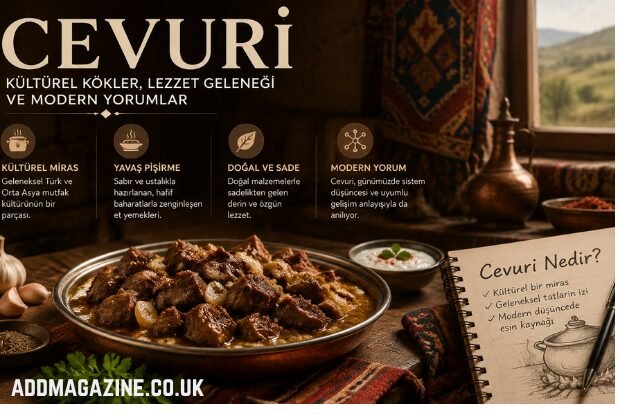
In some cultural explanations, Cevurı is linked to food traditions, especially those associated with Turkish and Central Asian cooking styles. While there is no universally documented dish with this exact name in formal culinary records, the term is often used to describe a style of preparation rather than a specific recipe.
This interpretation focuses on slow cooking methods and simple ingredients. The general idea is that meat-based dishes are prepared over time using basic seasoning and natural fats, allowing the ingredients to develop their own flavor without heavy processing.
Common elements associated with this interpretation include:
- Small cuts of lamb, beef, or goat
- Slow cooking over low heat
- Use of animal fat or natural oils
- Simple seasoning such as salt, garlic, and cumin
- Occasional use of yogurt or fermented dairy on the side
The cooking approach emphasizes patience. Instead of fast preparation or complex sauces, the focus is on gradual transformation of texture and taste. This method is common in many traditional food cultures where meals were prepared over long periods, often in shared community settings.
Even if Cevurı is not the official name of a specific dish, it is used in some discussions as a symbolic label for this kind of cooking style.
Cultural Meaning and Food Identity
Food in Turkish culture is not only about nutrition. It also reflects family structure, hospitality, and regional identity. Meals are often prepared in ways that preserve tradition and connect generations.
In this context, Cevurı is sometimes used as a symbolic reference to older cooking habits. These habits include:
- Cooking with available local ingredients
- Avoiding unnecessary complexity
- Respecting seasonal food cycles
- Sharing meals in communal settings
The idea behind Cevurı in cultural discussions is not just about a recipe. It represents a way of thinking about food as something slow, shared, and grounded in basic ingredients.
This interpretation connects to broader Central Asian food traditions, where meat, dairy, and grains form the core of daily meals. The simplicity of ingredients is balanced by long preparation times and careful cooking techniques.
Nutritional Perspective
When Cevurı is described as a slow-cooked meat-based dish, it is often associated with traditional nutritional benefits found in such foods.
Meat prepared through slow cooking typically retains key nutrients such as:
- Protein for muscle repair and energy
- Iron for blood health
- Zinc for immune support
- Vitamin B12 for nerve function
Slow cooking also affects the texture of meat, breaking down connective tissue and making it easier to digest. This is one reason such methods have been used in traditional diets for centuries.
In rural or livestock-based communities, this type of food preparation was practical. It allowed tougher cuts of meat to become soft and edible while preserving nutritional value.
Even in modern dietary discussions, slow-cooked meals are often seen as balanced because they rely on fewer processed ingredients.
Cevurı as a Concept in Modern Thinking
Beyond food, Cevurı is sometimes used as a metaphor in discussions about systems, organizations, and technology. In these contexts, the word is not about cooking but about structure and adaptation.
The basic idea is that systems should develop gradually rather than being forced into rigid designs. This interpretation draws a parallel with slow cooking:
- Ingredients represent individual components of a system
- Heat represents external pressure or change
- Time represents development and adaptation
Instead of forcing immediate results, the system is allowed to evolve naturally.
This metaphor is applied in different areas such as:
1. Organizational Development
Companies are sometimes described as evolving systems. A “Cevurı-style” approach in this context means allowing departments and processes to adjust gradually instead of enforcing strict top-down changes.
2. Software Design
In software development, modular and flexible systems are often preferred over rigid structures. The idea of gradual refinement and adaptation aligns with the metaphorical use of Cevurı.
3. Strategic Planning
Long-term planning often requires adjustment based on feedback. The Cevurı concept is used informally to describe strategies that evolve instead of remaining fixed.
This interpretation is not an official academic framework, but it is used as a conceptual analogy.
Digital Evolution of the Term
The rise of Cevurı as a searchable keyword is closely connected to how language behaves online. When words appear in digital content without strict definitions, they often gain multiple meanings.
Several factors contribute to this:
- Typing variations caused by keyboard layouts
- Missing diacritical marks in Turkish words
- Repetition of informal definitions in blogs
- Search engine indexing of similar spellings
- Content creation based on reinterpretation
Over time, these small variations create a separate identity for the word.
Cevurı is a clear example of how digital environments can reshape language. A word that may have started as a spelling variation can become a topic of discussion in its own right.
Why Cevurı Gains Attention
There are several reasons why people continue to search for and discuss Cevurı.
1. Curiosity About Unclear Terms
People are naturally drawn to words they do not fully understand. When a term appears in multiple contexts without a clear definition, it encourages exploration.
2. Interest in Traditional Food Culture
Global interest in traditional cooking has increased. Even loosely defined food-related terms attract attention because they suggest cultural depth.
3. Connection to Language and Translation
Because of its similarity to the Turkish word for translation, Cevurı often appears in language-related searches. This creates additional curiosity.
4. Use in Conceptual Discussions
The metaphorical use of Cevurı in systems thinking and adaptability discussions gives it relevance beyond food.
These combined factors help the term remain active in online content even without a fixed definition.
Interpretation Challenges
One of the main challenges with Cevurı is that it does not have a single authoritative source. This creates variation in meaning depending on context.
Some challenges include:
- No standardized spelling across sources
- Overlap with similar Turkish words
- Lack of formal culinary documentation
- Multiple informal interpretations online
Because of this, Cevurı functions more like an evolving concept than a clearly defined term.
Readers often need to interpret its meaning based on context rather than relying on a fixed definition.
The Role of Context in Understanding Cevurı
Context is essential when dealing with terms like Cevurı. The meaning changes depending on where it appears:
- In food discussions, it may refer to slow-cooked meat traditions
- In language discussions, it may be linked to translation or spelling variation
- In systems thinking, it becomes a metaphor for gradual development
- In digital content, it can be a keyword without fixed meaning
This flexibility is both a strength and a source of confusion.
It shows how modern language is not always fixed but often shaped by usage patterns.
Conclusion
Cevurı is best understood as a multi-layered term rather than a single defined concept. It exists at the intersection of language variation, cultural food interpretation, and modern metaphorical thinking.
In culinary discussions, it reflects slow cooking traditions that focus on simple ingredients and patient preparation. In linguistic contexts, it is connected to spelling variations of Turkish words, especially “çeviri.” Cevurı in modern usage, it sometimes becomes a symbol for adaptable systems that grow gradually rather than being strictly controlled.
Its meaning is not fixed, and that is what keeps it relevant. Cevurı represents how words can evolve through culture, technology, and interpretation. It also shows how digital communication can reshape language, turning small variations into widely discussed concepts.